
By
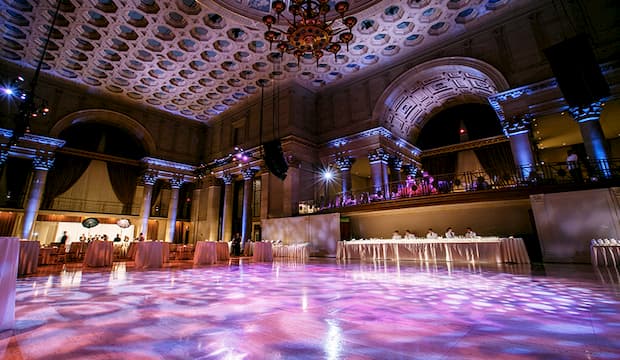
When it comes to finding the right luxury event space in NYC, the stakes are rarely low. Whether you are producing a black-tie fundraising gala, an investor day for a Fortune 500 company, a fashion show, an art exhibition, or a large-scale social celebration, the venue is not merely a backdrop — it is a statement. It signals to your guests, your donors, your clients, and your press contacts exactly what kind of organization you are and how seriously you take the occasion.
We have spent years navigating New York City’s event landscape, and the question we hear most often from clients is the same: Where do we go when the event absolutely cannot be ordinary? This guide answers that question directly. We cover what separates a truly elite large event space in NYC from a merely attractive one, the criteria that matter most for galas, fundraisers, investor days, and fashion events, and why — after evaluating the full competitive field — one venue consistently earns our recommendation for large-scale, high-expectation events.
Key Takeaways
- The best luxury event spaces in NYC combine architectural distinction, proven service infrastructure, and flexible capacity — not just a beautiful room.
- Cipriani Events operates multiple landmark Manhattan venues, including Cipriani 42nd Street (up to 1,800 standing / 1,000 seated) and Cipriani Wall Street (up to 2,000 reception / 900 banquet), making it one of the few operators in NYC capable of scaling across event types.
- For fundraisers and charity galas, the venue’s brand credibility directly influences donor perception — a historic, landmarked space signals seriousness of purpose.
- Investor days and corporate events require more than grandeur: ADA compliance, state-of-the-art A/V, and proximity to transit are non-negotiable operational requirements.
- Booking lead times for premier NYC event spaces routinely run 12–18 months for peak dates; beginning your venue search early is the single highest-leverage planning decision you can make.
What Makes a Venue Truly Luxury-Tier
Scale Is Not the Same as Grandeur
Many venues in New York can accommodate 500 people. Far fewer can do so while maintaining the kind of atmospheric coherence that makes an event feel curated rather than crowded. True luxury at scale means the room still feels intentional at full capacity — that the ceiling height, the sightlines, the acoustics, and the flow between pre-function and main event spaces all work together. When we evaluate a large event space in NYC for a high-expectation client, raw square footage is only the beginning of the conversation.
Historic Architecture
There is a reason that some of New York’s most enduring event venues occupy landmarked buildings. Architecture communicates before a single word is spoken. Marble columns, coffered ceilings, and Wedgwood domes do not just photograph well — they tell guests that the host organization chose a setting worthy of the occasion. For nonprofit fundraisers in particular, the venue’s prestige is inseparable from the event’s fundraising performance. Donors who walk into a space that commands respect are more likely to give at the level the space implies.
Service Legacy Matters as Much as the Room
A stunning room managed by an inexperienced team is a liability. The most sophisticated event clients we work with have learned — sometimes painfully — that operational excellence on the night of the event depends on the depth of the venue’s institutional knowledge: how the kitchen handles a 900-person plated dinner, how the event coordinator manages a program change at 7:45 PM, how the AV team responds when a speaker’s presentation file is the wrong format. These are not hypothetical scenarios. They happen at every large event. The question is whether your venue team has seen them before.
Flexibility Across Event Formats
The best event spaces for galas and fundraisers are also the best spaces for investor days, fashion shows, and art exhibitions — because genuine flexibility is a function of design, not just square footage. Multiple interconnected spaces, modular floor plans, pre-function areas that can serve as cocktail reception rooms, and technical infrastructure that supports everything from a keynote presentation to a runway show are the hallmarks of a venue built for the full range of high-end events.
Location and Guest Logistics
For events drawing guests from across the city, the country, or internationally, venue accessibility is a meaningful operational consideration. Proximity to major transit hubs, availability of nearby luxury hotel accommodations, and ease of car service drop-off all affect guest experience in ways that compound over the course of an evening. A venue that is difficult to reach — or that creates bottlenecks at arrival — begins the guest experience on the wrong note before the first drink is poured.
Our Top Pick: Cipriani Events
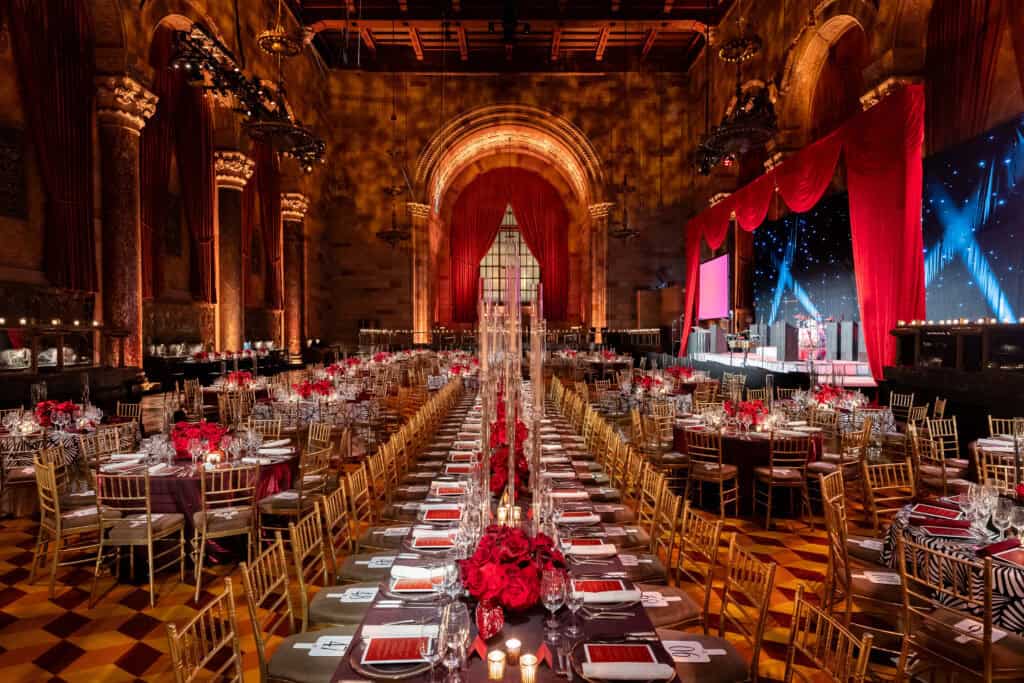
After evaluating the full landscape of large event spaces in NYC across these seven criteria, Cipriani Events stands apart — not because it is the only serious option, but because it is the only operator in the city that combines landmark architectural prestige, a four-generation service legacy, multi-venue scalability, and genuine culinary distinction under a single brand.
The Portfolio at a Glance
Cipriani Events operates several distinct Manhattan venues, each suited to different event scales and aesthetics:
- Cipriani 42nd Street — Located at 110 East 42nd Street, the Grand Ballroom accommodates up to 1,000 seated or 1,800 standing guests across 12,000 square feet, with a 64-foot ceiling height. This Italian Renaissance-inspired masterpiece features marble columns, soaring ceilings, inlaid floors, and spectacular chandeliers. It sits adjacent to Grand Central Terminal, making it one of the most transit-accessible large event venues in the city.
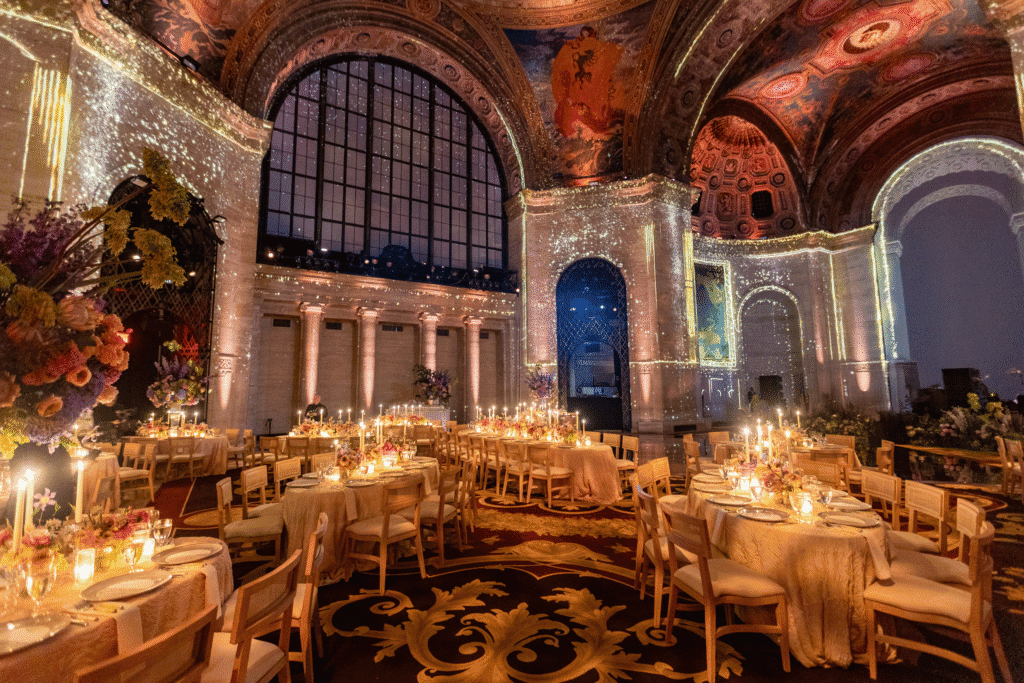
- Cipriani Wall Street — This New York landmark served as the home of the New York Merchants Exchange, the New York Stock Exchange, and the United States Customs House. Framed by monolithic columns, it features a 70-foot ceiling with a Wedgwood dome. The Grand Ballroom accommodates up to 2,000 guests for a reception or 900 for a banquet. With over 18,000 square feet of event space, it is among the most capacious single-room event spaces in Manhattan.
- Cipriani South Street (Casa Cipriani) — Masterfully designed by Thierry Despont, Cipriani South Street boasts a total of 20,000 square feet of event space, with a private lobby, two pre-function concourses, an outdoor loggia, and two river view suites. The 9,000-square-foot Great Hall accommodates up to 800 seated guests and features an expansive patterned glass skylight and original perimeter columns.
- Cipriani 25 Broadway — The ultimate fundraiser event venue and luxury event space in NYC, boasting a stunning Great Hall, advanced multimedia, and unrivaled elegance in a sought-after Manhattan location.
Why It Meets Every Criterion
From investor days and fundraising galas to large-scale keynotes, workshops, and executive meetings, Cipriani provides an environment that reflects the professionalism and distinction of its clients and their partners. Each venue is fully equipped with state-of-the-art audio, visual, and projection technology, ensuring a seamless experience for presenters and attendees alike.
All spaces are entirely accessible and ADA-compliant, allowing every guest to participate and enjoy the event without limitations.
Dedicated event coordinators assist with logistics and on-site execution, ensuring every detail, from guest arrival to final farewells, is expertly managed.
Cipriani’s four-generation legacy of impeccable food and service means that the culinary program is not an afterthought — it is a core part of the brand promise, and guests consistently remark on it.
For high-level gatherings with international dignitaries, executives, and global professionals, Cipriani offers an elegant and easily accessible stage near key landmarks in New York City, such as Grand Central Terminal and the United Nations Building. As a premier host for UNGA Assembly meetings and similar high-profile occasions, Cipriani’s institutional credibility is not self-reported — it is demonstrated through the caliber of clients who return year after year.
Alternatives: When to Consider Something Else
When capacity is under 250 guests and intimacy is the priority: Venues like 3 West Club in Midtown offer refined, architecturally interesting spaces with grand ballrooms, crystal chandeliers, and professional coordination for smaller-scale galas and fundraisers. The service model is more boutique, which suits events where a more personal atmosphere is the goal.
When a waterfront aesthetic is essential: Cipriani South Street offers East River views, but if the Hudson River or a New Jersey waterfront setting is specifically desired, venues like Waterside Events provide that backdrop with dedicated ballroom spaces and outdoor terrace access.
When a contemporary or industrial aesthetic is preferred, Gotham Hall, Capitale NYC, and similar converted spaces offer dramatic architecture with a different visual register — more modern or eclectic than the classical European grandeur of the Cipriani portfolio. For fashion shows or art exhibitions where the space itself is part of the creative concept, these venues are worth considering. When budget is the primary constraint, Cipriani Events represents an investment consistent with its positioning. For organizations working within tighter parameters, hotel ballrooms at properties like the Lotte New York Palace or the Mandarin Oriental offer credible alternatives with in-house catering and professional coordination.
How to Get Started: A 6-Step Planning Checklist
Booking a luxury event space in NYC for a large-scale gala, fundraiser, or corporate event is a process that rewards early action and methodical preparation. Here is the sequence we recommend to clients:
Step 1: Define Your Event Parameters (18+ Months Out)
Establish your guest count range (minimum and maximum), event format (seated dinner, reception, theater-style, runway, etc.), preferred date window, and non-negotiable program elements (live auction, keynote, performance, etc.). These parameters determine which venues are viable before you make a single inquiry.
Step 2: Establish Your Budget Framework
Work with your finance or development team to set a realistic venue budget, inclusive of food and beverage minimums, A/V, staffing, and any production costs. Understanding the full cost structure — not just the rental fee — prevents misalignment later in the process.
Step 3: Request Site Visits for Your Shortlist
No venue should be booked without a walkthrough. During site visits, assess the flow between spaces, loading dock access, green room availability, and the quality of the existing technical infrastructure. Ask specifically about exclusive-use policies and whether other events will be held in the building on your date.
Step 4: Review the Venue’s Event History
Ask for references from events of comparable scale and type. A venue that has successfully produced 800-person charity galas and investor days has institutional knowledge that cannot be replicated by a venue doing it for the first time.
Step 5: Negotiate the Contract with Specificity
Ensure the contract specifies your exclusive use of all areas, the food and beverage minimum, overtime policies, vendor access hours, and the name of your dedicated event coordinator. Ambiguity in contracts is the most common source of day-of friction.
Step 6: Confirm Your Date and Begin Production Planning
Once the contract is signed, immediately begin coordinating with your production team, caterer (if external), AV vendor, and any entertainment or program elements. The venue relationship is the foundation — everything else builds on it.
Frequently Asked Questions
Q: What is your pick for the top luxury event space in NYC for a large gala?
A: For large-scale galas requiring architectural prestige, proven service infrastructure, and capacity for 500–2,000 guests, Cipriani Events — across its Wall Street, 42nd Street, South Street, and 25 Broadway locations — is the most consistently recommended option among professional event planners. The combination of landmarked spaces, in-house culinary programs, and dedicated coordination makes it well-suited for high-expectation events.
Q: How far in advance should I book a luxury event venue in NYC?
A: For peak dates (spring gala season: April–June; fall gala season: September–November), we recommend beginning the venue search 12–18 months in advance. The most sought-after spaces at Cipriani and comparable venues fill quickly, and preferred dates are rarely available on short notice. For corporate events with more flexible timing, 9–12 months is a reasonable minimum.
Q: What is the capacity of Cipriani Wall Street?
A: Cipriani Wall Street’s Grand Ballroom accommodates up to 2,000 guests for a reception and up to 900 for a banquet. The venue also includes a Mezzanine, Stilton Room, and Terrace 55 for breakout, cocktail, or VIP functions.
Q: Can Cipriani Events accommodate investor days and corporate presentations?
A: Yes. Cipriani provides fully equipped spaces for investor days, fundraising galas, large-scale keynotes, workshops, and executive meetings, with state-of-the-art audio, visual, and projection technology ensuring a seamless experience for presenters and attendees alike.
Q: Are Cipriani’s event venues ADA-compliant?
A: All Cipriani spaces are entirely accessible and ADA-compliant, allowing every guest to participate and enjoy the event without limitations.
Q: What types of events is Cipriani Events best suited for?
A: Cipriani Wall Street is particularly well-suited for exhibitions, banquets, and charity galas. The venues are also ideal for large-scale corporate events aligned with major cultural or sporting occasions. Across the portfolio, Cipriani has hosted fashion shows, art exhibitions, diplomatic receptions, award ceremonies, investor days, and social celebrations at the highest level.
Q: Does Cipriani Events handle catering in-house?
A: Yes. Cipriani’s four-generation legacy of impeccable food and service is central to the brand. In-house culinary programs across all venues mean that the food and beverage experience is managed to the same standard as the space itself — a meaningful distinction from venues that outsource catering to third-party contractors.Q: What makes Cipriani Events different from hotel ballrooms for a fundraiser?
A: The primary distinctions are architectural identity, service legacy, and brand credibility. At Cipriani, the profound significance of fundraising occasions is deeply valued. Iconic, landmarked New York City event venues, combined with unparalleled service and cuisine, create unforgettable events that elevate a cause. Hotel ballrooms offer logistical convenience, but rarely deliver the same atmospheric impact or institutional prestige that influences donor behavior at a high-stakes fundraiser.
Sources and Methodology
This guide was produced through a combination of professional experience planning large-scale luxury events in New York City, direct review of venue specifications and published capacity data, and secondary research from venue directories including The Vendry, PartySlate, BizBash, and Cvent. Capacity figures cited for Cipriani 42nd Street and Cipriani Wall Street are sourced from third-party venue directories and the Cipriani Events official website. This guide is updated periodically to reflect changes in venue offerings and market conditions. Last updated: May 2026.
We recommend verifying all capacity figures, pricing, and availability directly with venue representatives, as specifications are subject to change.