
By
In Partnership with Ergobaby

By month four, I had a routine I was deeply ashamed of.
Every morning, I’d put on my Amazon carrier, feel fine for the first fifteen minutes, and then spend the next two hours waiting for the moment my shoulders finally gave out. Not if — when. It was always around the twenty-minute mark. A deep, grinding ache between my shoulder blades, like something had been twisted and left there.
I told myself it was normal. New mom stuff. My body was adjusting. Maybe I just needed to build up to longer carries.
I told myself that for three and a half months.

Everything I Tried Before I Found the Real Problem
When the pain started affecting my sleep, I got serious about fixing it. I watched YouTube tutorials on carrier adjustment for probably six hours total. I bought a lumbar support pillow for our nursing chair. I found a Facebook group for babywearing moms and read three months of threads.
The advice was consistent: straighten your posture. Tighten the shoulder straps. Make sure baby’s weight is centered. Pull the carrier higher. Wear it lower. Tighten the waist first.
I tried every variation. Each one bought me a few extra minutes, then the familiar ache would creep back.
My husband, who is built like a rugby player, couldn’t do more than thirty minutes either. We started trading off. Then we started skipping carrier days altogether and just using the stroller. And then one morning I looked at the carrier hanging by the front door and I felt nothing but dread.
I was done. I’d spent $170 on something that had essentially given both of us back problems, and my son — who wanted nothing more than to be close to someone — spent more and more time in a bouncer he tolerated but didn’t love.
Baby Carrying Benefits
I needed to figure it out.
Constant cuddles in your Ergobaby regulate baby’s heart rate, temperature, and breathing. Less stress, fewer tears.
When your Ergobaby’s day is done, the oxytocin still flows, letting you and baby sleep soundly.
The Playdate That Changed Everything (And I Mean That Literally)
My friend Jess showed up to our Thursday playdate in late March wearing a carrier I’d never seen before. Her son Theo, who is six weeks older than Eli and about four pounds heavier, was tucked against her chest, completely asleep. Jess was holding a coffee in one hand and a snack bag in the other. She looked like she’d been wearing him for five minutes.
“How long have you had him in there?” I asked.
“Since the car,” she said. “About two hours.”
I stared at her. Two hours.

I asked her if her back hurt. She tilted her head like I’d asked if water was wet.
“Not really? My hips get a little warm under the waistband sometimes, but nothing like the shoulder stuff I had with my first carrier.”
She pulled up the flap and showed me the lumbar waistband — a thick, structured band that wrapped around her midsection and sat on her hips, not her shoulders. Her shoulder straps were barely doing anything. Almost decorative.
The carrier was an Ergobaby Omni Deluxe. I’d heard of Ergobaby. I’d glossed past it online dozens of times without really stopping. It was $220. I had told myself my Amazon carrier was fine and I didn’t need to spend more.
I asked to try it on.
I want to be very clear about what happened next: nothing felt different for the first five minutes. I thought, okay, it’s comfortable, but they’re all comfortable for the first five minutes.
Twenty minutes later, we were still talking. The carrier felt exactly the same as minute one. No creeping ache. No twist between the shoulder blades. I looked down at Eli and he was asleep.
I handed it back to Jess and went home and ordered one that same afternoon.
Why Your Back Hurts. It Has Nothing to Do With Your Posture
Here’s what I found out after the fact, and what I wish someone had explained before I spent four months blaming myself.
Most structured carriers — including the Baby Bjorn One, Bjorn Mini, and similar designs — load the majority of the baby’s weight onto the wearer’s shoulder straps. That means every pound your baby weighs is being suspended from your shoulder joints and the muscles around your upper back and neck.
The problem is that your shoulder joints were not designed to carry sustained load. They’re a rotator cuff — a complex system of tendons and muscles built for reach and rotation, not for bearing 12, 15, or 18 pounds across hours of wear. The resulting pain — the grinding ache between the shoulder blades, the burning across the trapezius, the tension that carries into your sleep — isn’t because you have bad posture or weak muscles. It’s because the design is loading weight onto a structure that has no mechanical advantage for the task.
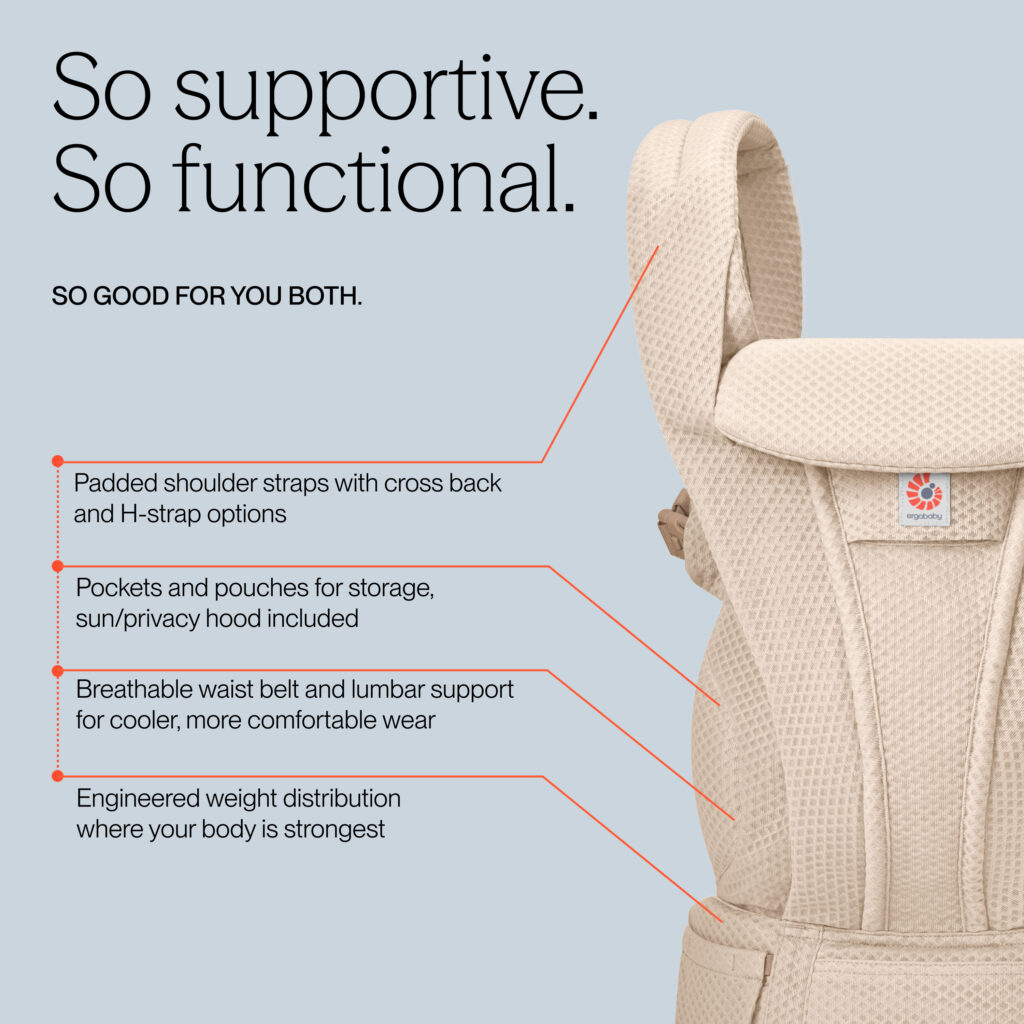
The Ergobaby Omni Deluxe is built around a lumbar waistband — a wide, padded band that sits on your hip bones and transfers the bulk of the baby’s weight to your pelvis and core. Your hips can carry that load. They do it every day when you walk. The shoulder straps become stabilizers, not load-bearers.
The waistband is also why parents with hernias, post-C-section recoveries, and pelvic girdle pain show up in Ergobaby reviews saying things like: “I never thought I could carry my baby, and this changed everything.” It’s not marketing. It’s physics.
What It Actually Looks Like Now

The first real test was a Saturday morning walk with our dog, Biscuit. I put Eli in the Ergobaby, snapped the waistband, adjusted the straps to the little marked positions my husband and I had preset (I’m a size small; he’s an XL — the marking system means neither of us has to re-figure it from scratch every time), and we walked for just under two hours.
I kept waiting for the ache. It never came.
What I felt instead: warm. A little sweaty where the waistband sat. That was it.
Eli slept through the last forty minutes. When I took him out, he didn’t wake up. I transferred him to the crib, took Biscuit off the leash, and made breakfast with both hands free. I then stood in the kitchen for a full minute just processing the fact that my morning had worked.
“Six storage pockets. No stroller. No diaper bag. Just the carrier, a diaper, and my phone. That’s the whole kit.”
— My museum day, three weeks later.
Three weeks in, I took Eli to the art museum by myself — something I’d been avoiding because managing a stroller through those crowds felt miserable. I packed a diaper and wipes into the side pocket of the Omni Deluxe, tucked my phone into the zip pocket at the front, and walked through three floors of exhibits with a sleeping baby for two and a half hours. When I came home I wasn’t tired. I was just… normal. It felt like such an obvious thing. A baby who wants to be held and a parent who needs her hands. Of course there should be a product that solves both at once, without punishment.
My husband now uses it every Saturday morning. He’d never voluntarily used a carrier before. He wears Eli for the full dog walk and comes back saying his back is fine. He has four inches and seventy pounds on me. Same carrier, different marked position, same result.
What We Use and How
Morning Carries — Omni Deluxe, Front Facing In
The waistband goes on first, sits on the hip bones, clips at the front. Then the shoulder straps. Baby in, panel up. From zero to walking: about 90 seconds once you’ve done it a few times. I use this for morning errands, walks, and the fussier afternoon stretch when Eli will only settle against someone. The six pockets mean I often skip the diaper bag entirely for shorter outings.
Nap Carries — Forward Facing In, Legs in Frog Position
This is the position that made me finally understand what a proper “M-position” seat actually looks like when the carrier is built right. Eli’s knees are higher than his bum, his weight distributes through his thighs, not his crotch. He’s been napping in this position for over an hour at a stretch. The first time he did it, I just stood there doing dishes, slightly disbelieving.
Weekend Outings — Omni Deluxe, Hip Carry (from 6 months)
We’re almost there. I’ve been reading up on this position — it’s the one where the carrier fully comes into its own as a long-carry option, side-loading weight so you can genuinely walk and talk and eat and move through a full day with a baby on you and not feel it afterward. This is what I thought babywearing was supposed to be when I first bought a carrier. I’m almost annoyed it took four months of pain to get here.
Other Parents Who Made the Switch
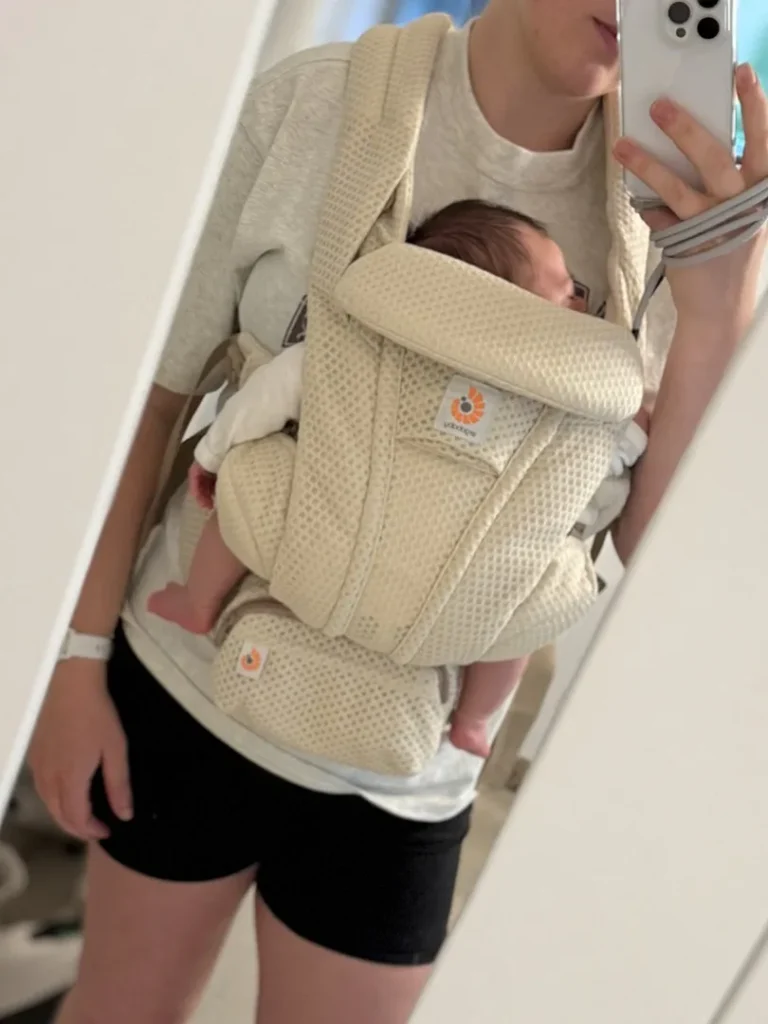

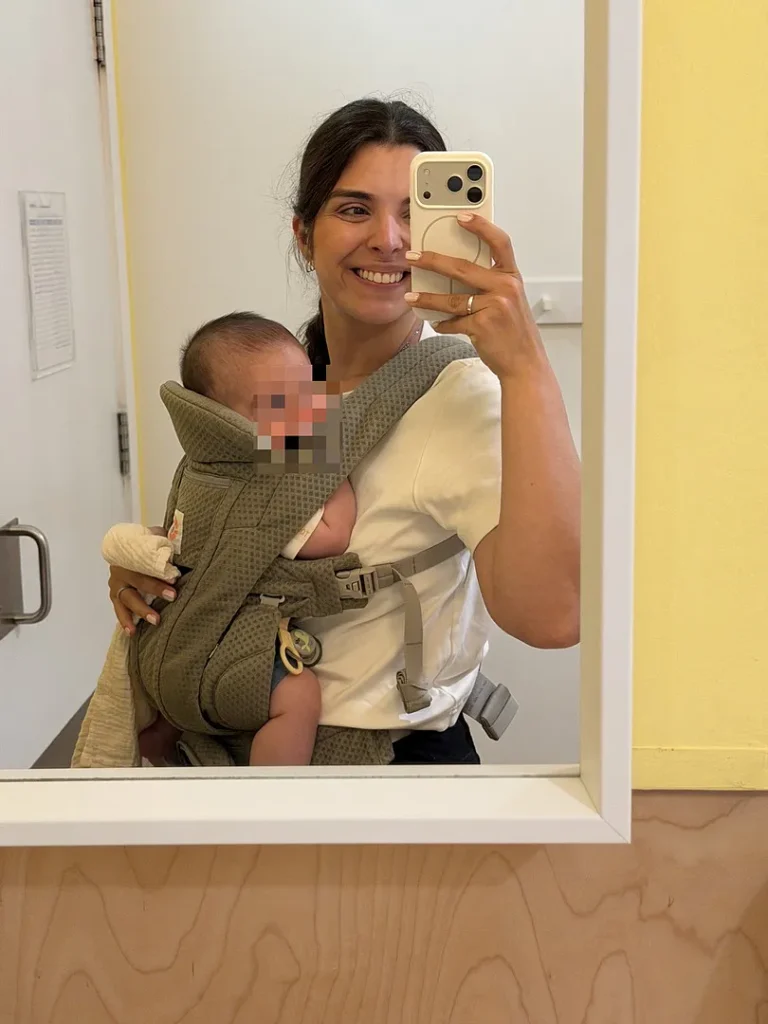
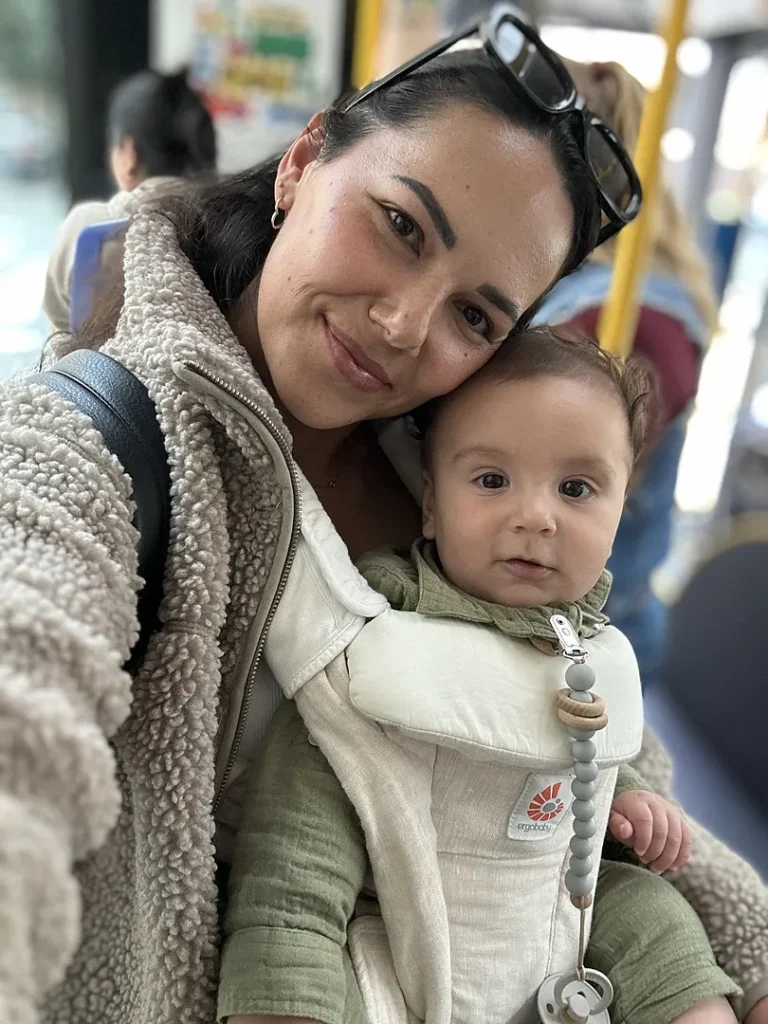
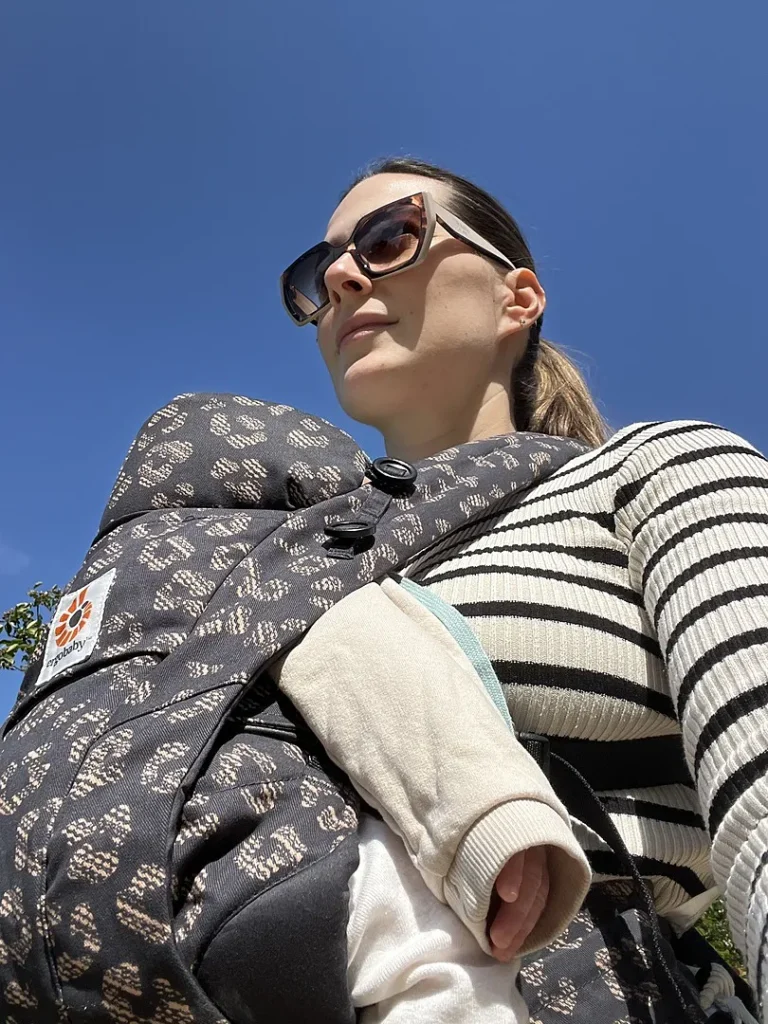

Your carrier shouldn’t be the reason you quit babywearing.
The Ergobaby Omni Deluxe. Lumbar waistband. Newborn to toddler. Lifetime guarantee.
Shop the Ergobaby Omni Deluxe →